VO2 max is a measure of how much oxygen your body can use during intense exercise. The higher it is, the more efficiently you can deliver and use oxygen, and the better your endurance and performance tend to be. Whether you run, cycle, row, play field sports, or just want better health, improving VO2 max is one of the most powerful training goals you can have.
What Exactly Is VO2 Max?
VO2 max stands for maximal oxygen uptake. It is usually expressed as milliliters of oxygen used per kilogram of body weight per minute (ml/kg/min). In simple terms, it describes how good your heart, lungs, blood vessels, and muscles are at transporting and using oxygen when you are working at your absolute limit.
- Heart and circulation: A stronger heart pumps more blood per beat, delivering more oxygen.
- Lungs: Efficient lungs move oxygen into the blood and remove carbon dioxide.
- Blood and capillaries: More red blood cells and a denser capillary network help deliver oxygen to muscles.
- Muscles: Mitochondria and enzymes inside muscle cells use oxygen to produce energy.
Why Improving VO2 Max Matters
Boosting your VO2 max does not just help elite athletes. It also supports overall health and makes everyday activities easier. A higher VO2 max is associated with reduced risk of cardiovascular disease and overall mortality, improved work capacity, and better performance in any endurance-related activity.
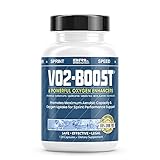
VO2-Boost Natural Endurance and Oxygen Supplement to Help VO2 max w/Rhodiola Rosea, B12, and Alpha Lipoic Acid (120 Capsules) (30 Day Supply)

FIRST ENDURANCE OptygenHP - Premium Endurance Supplement | Boost Power | Increase Performance and Endurance | Improves Oxygen Utilization| 120 Capsules
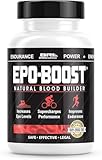
EPO-BOOST Natural Blood Builder Iron Supplement. RBC Support Made in USA with Echinacea & Dandelion Root helping VO2 Max, Energy, Endurance (1-Pack)

Novex Biotech GF-9 Fruit Punch Powder – 30 Count - Supplements for Men - Boost Critical Peptide That Supports Energy and Performance
Key Principles for Improving VO2 Max
Improving VO2 max is not about one magic workout. It comes from combining multiple training elements in a smart way over weeks and months.
- Consistency: Train regularly, ideally at least 3–5 days per week.
- Progressive overload: Gradually increase volume or intensity so your body keeps adapting.
- Variety of intensities: Include easy, moderate, and hard efforts, not just one pace.
- Recovery: Improvements happen when you rest and adapt to the training stress.
1. Build an Aerobic Base
Your aerobic base is the foundation for VO2 max. Without it, hard intervals just feel like hitting a wall.
- How: Do 2–4 sessions per week of low to moderate intensity cardio (jogging, cycling, rowing, brisk walking) for 30–60 minutes.
- Intensity guide: You should be able to hold a conversation. This is often around 60–75% of your maximum heart rate.
- Goal: Improve your heart’s stroke volume, capillary density, and fat-burning efficiency.
2. Add High-Intensity Interval Training (HIIT)
High-intensity intervals near your maximal effort are one of the most direct ways to raise VO2 max. They challenge your body to deliver and use as much oxygen as possible in short bursts.
- Classic VO2 max intervals: 3–5 minute intervals at about 90–95% of your maximum heart rate with equal or slightly shorter recovery periods.
- Example workout: After a warm-up, perform 4 × 4 minutes hard (you can speak only a few words) with 3 minutes of easy movement between intervals.
- Frequency: Start with 1 session per week, then progress to 2 sessions if you tolerate it well.
3. Use Short, Intense Repeats
Short, fast repeats are another powerful tool. They push you close to maximum effort but are short enough that you can accumulate a lot of high-intensity work.
- Example session: 10–12 × 30 seconds hard with 60–90 seconds easy recovery.
- Intensity: Around 95–100% of your maximum effort for the 30-second segments.
- Tip: Focus on good technique when you are tired to build both VO2 max and efficiency.
4. Include Tempo and Threshold Work
Tempo or threshold sessions are done just below your all-out 1-hour race pace (often called lactate threshold). They might not be as intense as VO2 intervals, but they support the same system and help you stay at a strong pace longer.
- Example: 20–30 minutes at a “comfortably hard” pace where speaking more than a few words is difficult.
- Structured version: 3 × 10 minutes at tempo with 3–5 minutes easy between.
- Benefits: Raises your threshold so you can operate closer to your VO2 max for longer periods.
5. Strength Training to Support VO2 Max
Strength training may not directly raise VO2 max, but it improves muscle efficiency, power, and resilience, letting you train harder and longer.
- Focus on: Compound movements like squats, lunges, deadlifts, step-ups, rows, and presses.
- Frequency: 2–3 sessions per week for 30–45 minutes.
- Reps and sets: 2–4 sets of 6–12 reps with good form, gradually increasing weight over time.
6. Technique and Efficiency
Better movement efficiency means you use less energy and oxygen at the same speed. This gives you room to push your VO2 max higher.
- Running: Work on cadence, posture, and relaxed arm swing.
- Cycling: Maintain a smooth pedal stroke with a comfortable cadence (often 80–95 rpm).
- Rowing: Coordinate leg drive, hip hinge, and pull so each stroke is powerful and smooth.
7. Cross-Training and Variety
Different cardio modes still challenge your heart and lungs, even if the muscles are different. Cross-training can help you build VO2 max while reducing overuse injuries.
- Alternate running with cycling, rowing, swimming, or elliptical training.
- Use different machines or routes to keep your mind fresh and your body adapting.
8. Monitor Progress with Simple Tests
Lab tests with gas analysis are the gold standard for VO2 max measurement, but you can track progress using simple field tests and smart devices.
- Time trial tests: Measure how far you can run in 12 minutes, or your time for a set distance (like 1.5 miles or 2 km). Improvements usually reflect gains in VO2 max and endurance.
- Heart rate response: Notice if the same pace feels easier and your heart rate is lower than before.
- Wearables: Many GPS watches and fitness trackers estimate VO2 max based on speed, heart rate, and variability. Use these as trend indicators rather than exact numbers.
Helpful Tools and Gear
Certain tools can make training more effective and help you stay consistent.
- A reliable heart rate monitor helps you stay in the right zones for easy runs, tempo sessions, and VO2 max intervals.
- A GPS watch or fitness tracker can guide structured workouts and track estimated VO2 max trends. You can explore various GPS running watches to find a model that fits your budget.
- Comfortable, supportive footwear is critical if you run. Browse suitable running shoes for men or running shoes for women that match your needs.
- For home workouts, a compact set of adjustable dumbbells can cover most of your strength training.
- If you prefer indoor cardio, consider a quality indoor cycling bike or rowing machine for structured interval training at home.
Sample 8-Week VO2 Max Training Plan
This is a general template for someone who already does some cardio and wants to focus on VO2 max. Adjust intensities and volumes to match your current fitness and always listen to your body.
- Weeks 1–2: Build Foundation
- 2–3 easy aerobic sessions (30–45 minutes).
- 1 tempo session: 2 × 10 minutes at comfortably hard pace with 5 minutes easy between.
- Optional 1 short interval session: 6 × 30 seconds hard, 90 seconds easy.
- Weeks 3–4: Introduce VO2 Max Intervals
- 2 easy aerobic sessions (30–60 minutes).
- 1 tempo session: 20 minutes continuous tempo.
- 1 VO2 max session: 4 × 3 minutes hard (90–95% max heart rate) with 3 minutes easy recovery.
- 2 strength sessions (full-body, 30–40 minutes).
- Weeks 5–6: Peak VO2 Max Work
- 2 easy aerobic sessions.
- 1 tempo or threshold session: 3 × 10 minutes at tempo.
- 1 VO2 max session: 5 × 4 minutes hard with 3 minutes easy recovery.
- Short strides or sprints at the end of one easy session (4–6 × 15–20 seconds fast but relaxed).
- Weeks 7–8: Consolidate and Deload
- Reduce total volume by 20–30%.
- 1 VO2 max session per week: 3–4 × 3 minutes hard.
- 1 tempo session or moderate progression run (starting easy and finishing moderately hard).
- Extra attention to sleep, nutrition, and easy days so adaptations can lock in.
Recovery, Nutrition, and Lifestyle
Your training only works if you recover from it. Recovery and lifestyle habits strongly influence how much your VO2 max improves.
- Sleep: Aim for 7–9 hours of quality sleep per night. This is when most adaptation happens.
- Nutrition: Eat enough calories to support training, including carbohydrates for energy, protein for muscle repair, and healthy fats for hormones and recovery.
- Hydration: Stay well hydrated throughout the day, not just during workouts.
- Stress management: High life stress plus hard training can lead to burnout and overtraining.
Common Mistakes When Training for VO2 Max
- Training too hard, too often: VO2 max intervals are stressful. More is not always better. Respect your easy days.
- Skipping the aerobic base: Only doing hard intervals without a foundation often leads to plateaus and injury.
- Ignoring strength and mobility: Weak or tight muscles can limit performance and increase injury risk.
- Not tracking progress: Without occasional tests or data, it is hard to know if you are actually improving.
Safety Considerations
Because VO2 max training involves high intensities, it is important to approach it safely.
- If you have any history of heart or lung disease, high blood pressure, chest pain, fainting, or other health issues, talk to a healthcare professional before starting intense training.
- Always warm up for at least 10–15 minutes before VO2 max intervals, gradually raising your heart rate.
- Stop and seek medical advice if you experience chest pain, unusual shortness of breath, dizziness, or palpitations during exercise.
Putting It All Together
Improving VO2 max is a long-term project, but it is absolutely achievable with smart training. Build a solid aerobic base, layer in tempo work, and carefully add high-intensity intervals. Strengthen your body in the gym, move efficiently, and give yourself time to recover. With consistent effort over weeks and months, you will not only see your VO2 max rise, but also feel stronger, faster, and more energetic in every part of your life.
VO2-Boost Natural Endurance and Oxygen Supplement to Help VO2 max w/Rhodiola Rosea, B12, and Alpha Lipoic Acid (120 Capsules) (30 Day Supply)
FIRST ENDURANCE OptygenHP - Premium Endurance Supplement | Boost Power | Increase Performance and Endurance | Improves Oxygen Utilization| 120 Capsules
EPO-BOOST Natural Blood Builder Iron Supplement. RBC Support Made in USA with Echinacea & Dandelion Root helping VO2 Max, Energy, Endurance (1-Pack)