Convert peptide measurements between mcg, mg, mL, and μL. Add an optional concentration to calculate accurate mass-to-volume and volume-to-mass conversions instantly online. (How the Peptide Units Converter Works / Medical disclaimer).
Related Products:

Vital Proteins Collagen Peptides Powder, Unflavored, 9.33oz

COSRX 6X Peptide Collagen Skin Booster Toner Serum for Dull Skin, 5.07 oz

Vital Proteins Collagen Peptides Powder Advanced, Unflavored, 20oz
The Peptide Units Converter helps convert measurements between micrograms, milligrams, milliliters, and microliters. Enter a value, select its unit, and choose the number of decimal places to display. For conversions between mass and liquid volume, enter the mixture concentration in mg/mL. Results update automatically and can be copied for reference. Always confirm the concentration, entered values, units, and calculated results with a qualified healthcare professional or pharmacist before use.
| Unit | Value |
|---|
Related Products:
Vital Proteins Collagen Peptides Powder, Unflavored, 9.33oz
COSRX 6X Peptide Collagen Skin Booster Toner Serum for Dull Skin, 5.07 oz
Vital Proteins Collagen Peptides Powder Advanced, Unflavored, 20oz

medicube PDRN Pink Peptide Serum with Salmon DNA

The Ordinary Multi-Peptide + Copper Peptides 1%, GHK-Cu Anti-Aging Serum for Fine Lines and Skin Elasticity, 1 Fl Oz
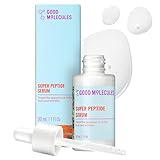
Good Molecules Super Peptide Serum - Anti-aging Facial Serum with Peptides and Copper Tripeptides to Plump and Firm - Water-Based Skincare for Face
How to Use the Peptide Units Converter
The Peptide Units Converter can convert measurements between mcg, mg, mL, and μL. A concentration is only required when converting between a mass measurement and a liquid-volume measurement.
1. Enter the value
Enter the measurement you want to convert in the Value field.
For example, enter 500 to convert 500 mcg, 500 mg, 500 mL, or 500 μL.
2. Select the starting unit
Use the From unit dropdown to choose the unit of the value you entered:
- mcg (μg) — micrograms
- mg — milligrams
- mL — milliliters
- μL (uL) — microliters
3. Enter the concentration when needed
Enter the concentration in mg/mL when converting between mass and liquid volume.
For example, if a prepared mixture contains 2.5 mg per mL, enter 2.5 in the Concentration field.
A concentration is not needed for:
- mcg to mg
- mg to mcg
- mL to μL
- μL to mL
A concentration is required for:
- mg or mcg to mL or μL
- mL or μL to mg or mcg
4. Choose the display precision
Use the Precision dropdown to select how many decimal places appear in the results. Very small positive values may display additional decimal places so they are not incorrectly shown as zero.
5. Read the conversion results
The results table displays the equivalent value in each available unit. When no concentration is entered, results are shown only for units within the same measurement type.
6. Copy or reset the results
- Select Copy to copy the entered value, concentration, and conversion results.
- Select Reset to clear the fields and restore the default settings.
How the Conversion Math Works
Micrograms and milligrams
1 mg = 1,000 mcg
To convert milligrams to micrograms:
mcg = mg × 1,000
To convert micrograms to milligrams:
mg = mcg ÷ 1,000
Milliliters and microliters
1 mL = 1,000 μL
To convert milliliters to microliters:
μL = mL × 1,000
To convert microliters to milliliters:
mL = μL ÷ 1,000
Mass to liquid volume
When the concentration is known:
Volume (mL) = Mass (mg) ÷ Concentration (mg/mL)
Example: At a concentration of 2.5 mg/mL, a mass of 0.5 mg corresponds to:
0.5 mg ÷ 2.5 mg/mL = 0.2 mL
Liquid volume to mass
When the concentration is known:
Mass (mg) = Volume (mL) × Concentration (mg/mL)
Example: At a concentration of 2.5 mg/mL, a volume of 0.2 mL contains:
0.2 mL × 2.5 mg/mL = 0.5 mg
Important: The converter performs mathematical unit conversions only. It does not verify product identity, concentration accuracy, suitability, sterility, measurement technique, or whether a substance should be used.
Conversion results depend entirely on the values, units, and concentration entered by the user. Incorrect product labeling, concentration, unit selection, decimal placement, or measurement technique may produce inaccurate or unsafe results. Always verify the product label, concentration, prescribed amount, measurement unit, and calculated result with a qualified healthcare professional or pharmacist before preparing, measuring, mixing, or using any substance.
Do not begin, stop, combine, or change any treatment based solely on this converter. Appsoup.com and the converter’s creators do not guarantee the accuracy, completeness, suitability, or safety of the results and are not responsible for errors, misuse, or decisions made based on the information provided. Use of this converter is at your own risk.